

Tree removal in Cavan
Dead, diseased, wind-damaged and badly placed trees taken down by controlled felling or climbed and lowered in sections near buildings.
Tree surgery servicesLicensed and insured tree surgeons working in Cavan Town, Virginia, Bailieborough, Cootehill and the rural drumlin country in between. Felling, pruning, stump grinding and hedge work, with a clean site when we leave.
Cavan is not an easy county for tree work. Rolling drumlins, wet ground, long rural lanes and hundreds of lakes mean that the same job can look very different from one townland to the next. A tree that would be a straightforward felling in an open field becomes a careful, piece-by-piece dismantle when it is leaning over a bungalow on a drumlin slope or hanging out over a lake shore.
5 County Tree Surgeons covers the whole of County Cavan. We take down dead and dangerous trees, reduce trees that have outgrown their space, grind out stumps, cut back hedges and deal with storm damage. Before quoting, we look at the tree, the ground it stands on and how we get in and out, then give you a clear price that sets out exactly what is included.
The main jobs we carry out for homeowners, farmers and businesses across the county.
Dead, diseased, wind-damaged and badly placed trees taken down by controlled felling or climbed and lowered in sections near buildings.
Tree surgery services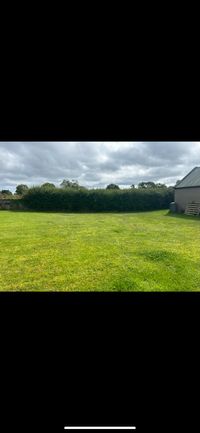
Crown lifts over lanes and driveways, crown thinning for light, reductions for oversized trees and removal of dead wood.
Pruning and reductions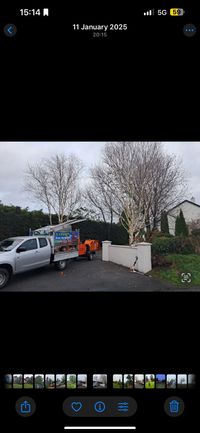
Stumps ground out below the surface so you can reseed, replant or build over the area.
Stump grinding and removal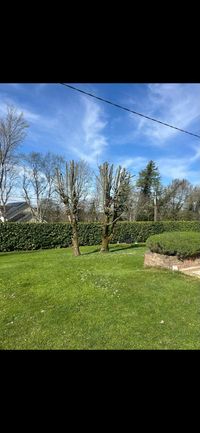
Garden hedges trimmed and overgrown leylandii, laurel and roadside hedgerows reduced at the right time of year.
Hedge cutting and landscaping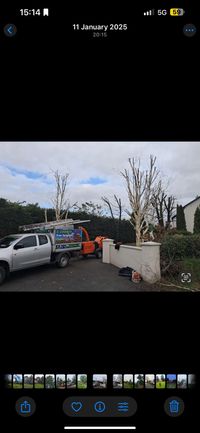
Uprooted trees, snapped conifers and hanging branches made safe and cleared after high winds.
Report storm damage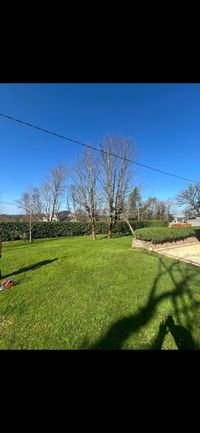
Overgrown conifer rows and shelter belts reduced, thinned or removed before they become a risk to the house.
Conifer work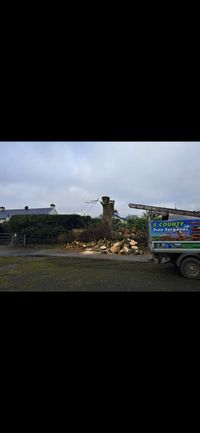
Much of Cavan sits on drumlins: small, steep, rounded hills with heavy clay soils and wet hollows between them. That landscape has a real effect on trees and on how we work on them.
On waterlogged clay, trees tend to root shallowly rather than deeply, which leaves them more likely to be pushed over in strong winds once the ground is saturated. A tree that has started to lean, has cracked or lifted soil around its base, or sits in a hollow where water lies all winter deserves a closer look, especially if it is within reach of the house.
Wet ground also shapes the job itself. Heavy machinery and timber trailers can rut lawns and fields badly in winter. Depending on the site, we may carry timber out by hand, lay ground protection where vehicles have to cross, or schedule non-urgent work for a drier spell. Felling on a slope needs extra planning too, because timber can roll once it hits the ground. Tell us about steep banks, soft patches and long lanes when you ask for a quote so we can plan around them.
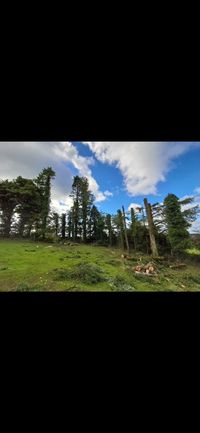
With Lough Sheelin, Lough Ramor, Lough Oughter, Lough Gowna and countless smaller lakes, plenty of Cavan homes, holiday properties and angling spots have trees growing right along the water. Alder, willow, ash and sycamore lean out over the shore to reach the light, and over time they become heavy on one side, block views and drop limbs onto jetties, boats and paths.
Work beside water takes more care. Branches and sawdust should not end up in the lake, banks can be soft and unstable, and access is often limited to a narrow strip of ground. In many cases a careful reduction or crown lift on the water side keeps the tree and the bank stable while opening up the view, which is often a better result than removal. Tree roots hold shorelines together, so taking out a whole row can lead to erosion.
Some Cavan lakes and their surroundings are designated conservation sites, including the Lough Oughter complex near Killeshandra and Killykeen. Significant work on or beside a designated site may need input from the National Parks and Wildlife Service, so mention the location when you get in touch and we will help you check.
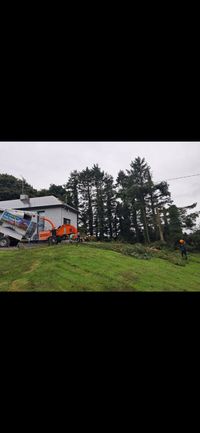
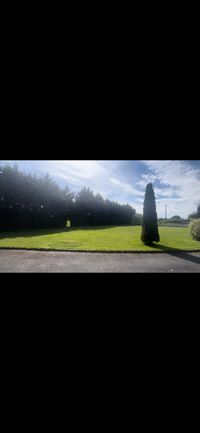
Spruce, larch and leylandii were planted widely around Cavan farmhouses and bungalows as windbreaks. Many of those rows are now 15 to 25 metres tall, far bigger than anyone expected, and standing on the same shallow, wet soil described above. They are among the first trees to come down in a big storm, and when one goes it often takes the next with it.
If you have a tall conifer row within falling distance of your home, outbuildings or a road, it is worth having it assessed before the winter storms rather than after. Options range from reducing or removing the trees nearest the house to replacing the whole row in stages with a lower, more manageable hedge or broadleaf screen.
After a storm, follow these steps:
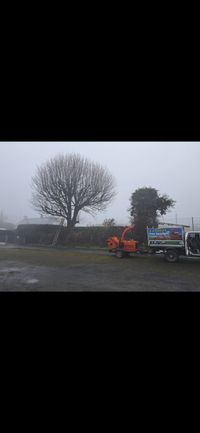
Cavan's small drumlin fields are divided by miles of hedgerow, and ash is one of the most common trees growing in them. Ash dieback is now present across the county, and roadside ash is a particular concern because a falling limb can land on a car or a passing walker.
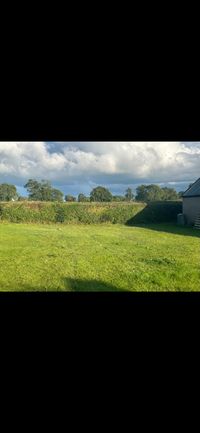
Landowners are responsible for trees and hedges growing along their roadside boundaries, and the council can require dangerous roadside trees to be dealt with. Watch for ash with thin, patchy crowns, bare dead tips at the top and bunches of new shoots sprouting from the trunk. Dead ash dries out and becomes brittle quickly, so trees that are clearly dying are safer and usually cheaper to deal with before they are fully dead.
Hedgerow cutting is restricted under the Wildlife Acts from 1 March to 31 August, with limited exemptions, and active nests are protected all year. Roadside hedge cutting and reductions are best booked from September through to the end of February. For more on the dates, see our guide to hedge cutting dates in Ireland.
A lot of tree work in Cavan happens on farmland and larger rural sites, where permissions matter more than in a town garden. Under the Forestry Act 2014, felling generally needs a licence from the Department of Agriculture, Food and the Marine. The exemptions include trees within 30 metres of a building and trees in urban areas, but felling a line of trees along a field boundary or clearing part of a plantation is likely to need a licence. If you are unsure, ask before any trees come down.
Trees covered by a Tree Preservation Order, a planning condition or a conservation designation also need checking, and Cavan County Council can confirm what applies to a particular property. Older mature trees can host bats, all of which are protected in Ireland, so trees with cavities, loose bark or ivy cover may need a check before major work. We will raise any of these points with you at quote stage rather than finding out on the day.
Getting a job priced and done is simple.
Send your Eircode or townland, a photo of the whole tree or hedge, and a short note on what you want done.
Simple jobs can usually be priced from photos. For large trees, slopes, water or wet ground, we arrange a visit first.
We protect the ground and anything nearby, keep the work area secure and stick to what was agreed.
Brash chipped, timber stacked or removed and the area raked clean before we head off.
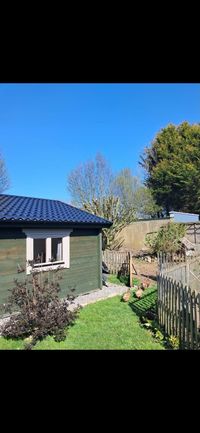
Two jobs that look identical in a photo can be priced very differently once you factor in the site. In Cavan, the biggest variables are usually access and ground conditions: a tree at the end of a long, soft lane or on a steep drumlin bank takes more time and planning than one beside a hard driveway.
If you have several jobs, such as a conifer row, a roadside ash and an old stump, pricing them together on one visit is nearly always better value than separate callouts.
Request a quoteFrom the towns in the south and east to the lakelands and the border country in the north and west.
We work throughout County Cavan, including Cavan Town, Virginia, Bailieborough, Kingscourt, Cootehill, Belturbet, Ballyjamesduff, Ballyconnell, Arva, Killeshandra, Mullagh, Shercock, Kilnaleck, Blacklion and Swanlinbar, along with the surrounding townlands and the shores of Lough Sheelin, Lough Ramor and Lough Oughter.
In the towns and newer estates, most jobs involve trees that have outgrown small gardens, overhanging boundaries and tight side access. Out in the countryside, it is more often conifer shelter belts, roadside ash, overgrown hedgerows and lakeside trees. Send us your Eircode with your enquiry and we will confirm coverage straight away.
Tree removal and pruning across Mullingar, Athlone and County Westmeath.
Tree surgeon WestmeathTree surgery, hedge cutting and storm clearance in County Roscommon.
Tree surgeon RoscommonA selection of removals, reductions, stump grinding and hedge jobs.
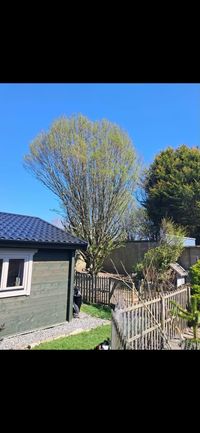
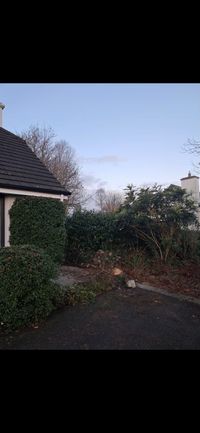
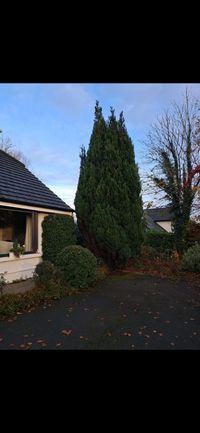
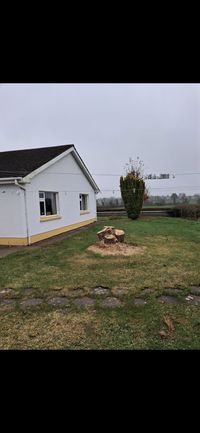
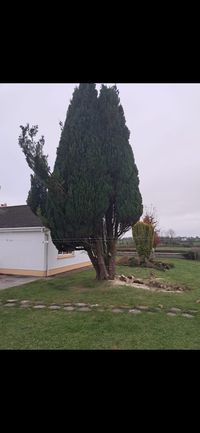
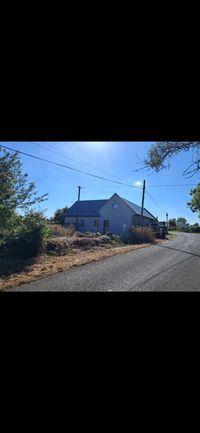
It depends on the size and condition of the tree, the ground conditions and access, what is underneath it, and whether you want the timber and stump dealt with. Send photos and your Eircode and we will give you a free quote that lists exactly what is included.
Possibly. Felling generally needs a licence from the Department of Agriculture, Food and the Marine, with exemptions that include trees within 30 metres of a building and trees in urban areas. Boundary trees and plantation trees on farmland often need a licence, so check before felling.
Yes. Lakeside work needs extra care to keep debris out of the water and to protect soft banks, and some Cavan lakes are designated conservation sites where the National Parks and Wildlife Service may need to be consulted. Tell us the location and we will help you check.
Yes, but it affects how the job is done. We may carry timber out by hand, protect the ground where vehicles cross, or schedule non-urgent work for drier weather to avoid damaging lawns and fields.
Not necessarily, but tall conifer rows on wet Cavan soils are prone to blowing over in storms. If they could reach your house, outbuildings or a road, have them assessed. Reducing or removing the nearest trees is often enough.
The Wildlife Acts restrict cutting hedgerows between 1 March and 31 August, with limited exemptions, and active nests are protected all year. Heavy hedge cutting is best booked between September and February.
Yes. Stumps are ground below ground level so the area can be reseeded or replanted. It can be added to a tree removal or booked as a separate job.
Yes. 5 County Tree Surgeons is licensed and fully insured, and we can show proof of insurance before work starts.
All of County Cavan, including Cavan Town, Virginia, Bailieborough, Kingscourt, Cootehill, Belturbet, Ballyjamesduff, Ballyconnell and the surrounding rural areas.
Send us a photo, your Eircode and a line about the job, and we will come back to you with a free quote. You can also read more about our tree surgery and stump grinding services.