

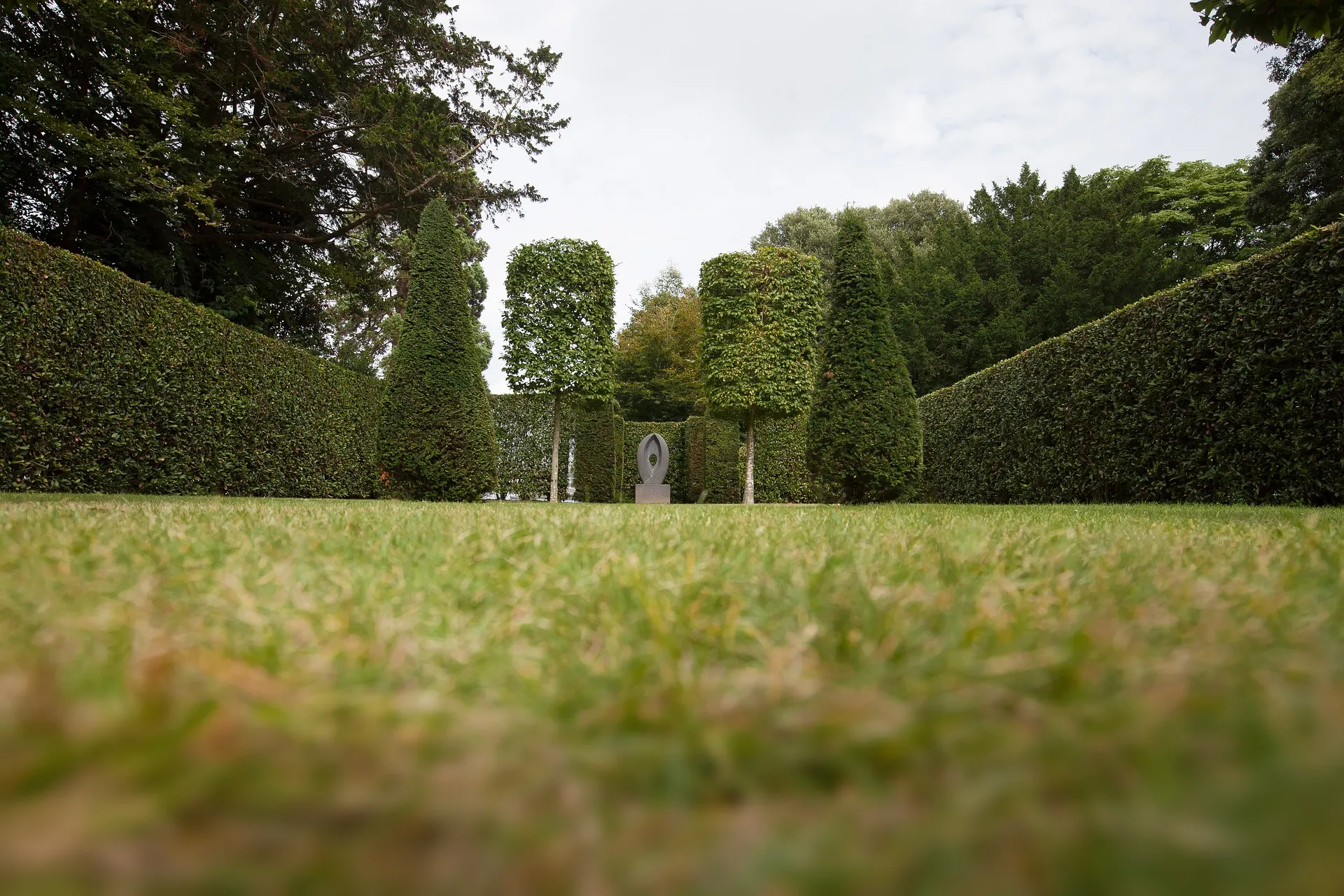
Tree felling and removal
Dead, dying and dangerous trees taken down safely. Felled in one piece where there is room, or dismantled in sections over roofs, sheds and boundaries where there is not.
Tree surgery servicesLicensed and insured tree surgeons covering Longford, Cavan, Westmeath, Roscommon and Sligo. Safe removals, careful pruning and a clean site when we leave.
5 County Tree Surgeons is a licensed and insured tree surgery company working across Longford, Cavan, Westmeath, Roscommon and Sligo. We fell dangerous trees, prune and reduce trees that have outgrown their space, grind out stumps, cut back overgrown hedges and clear up after storms. We work on private gardens, farms, rural sites and commercial properties.
Every job starts with the same question: what does this tree actually need? Plenty of trees that people expect to lose can be kept with the right pruning, and some trees that look fine from the road have problems that only show up close. We tell you what we see, give you a clear quote that sets out exactly what is included, and leave the site tidy when we finish.
From a single overhanging branch to clearing a full site, these are the jobs we do most often for customers in Longford and the surrounding counties.
Dead, dying and dangerous trees taken down safely. Felled in one piece where there is room, or dismantled in sections over roofs, sheds and boundaries where there is not.
Tree surgery services
Crown lifting, thinning, reduction and deadwood removal to bring a tree back into proportion without spoiling its natural shape.
Pruning and crown work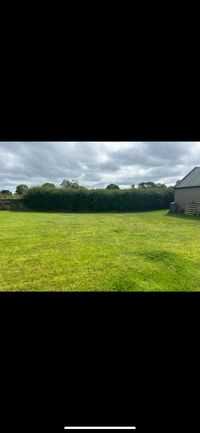
Old stumps ground out below ground level so you can reseed, replant or pave over the spot instead of mowing around it.
Stump grinding and removal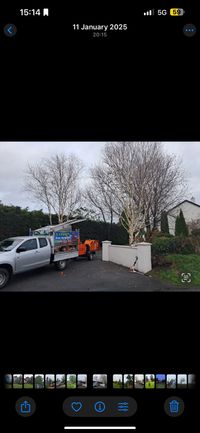
Regular trims and heavy reductions for leylandii, laurel, beech, griselinia and mixed boundary hedges, timed around the nesting season.
Hedge cutting and landscaping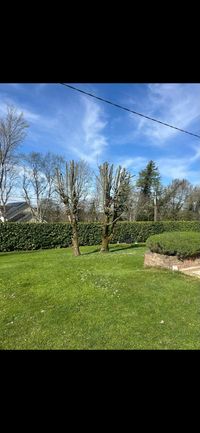
Fallen trees, split trunks and hanging limbs made safe after high winds, with urgent jobs put to the front of the queue.
Report storm damage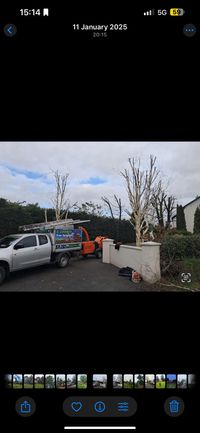
Overgrown gardens cleared, and new lawns, planting and boundaries put in once the tree work is finished.
Landscaping in Longford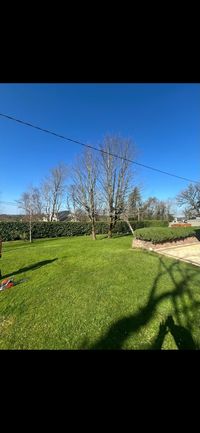
Removal is the right call when a tree is dead, split, leaning badly, heavily infected with disease such as ash dieback, or simply growing in the wrong place. Roots lifting a driveway, a large conifer shading the whole back garden or a tree pressing against a gable wall are all common reasons customers in Longford ask us to take a tree down.
How it comes down depends on what is around it. In an open field or a large rural garden, a tree can often be felled in one piece in a controlled direction. Beside a house, shed, glasshouse, wall or road, we climb the tree and take it apart from the top down, lowering heavier limbs on ropes so nothing drops onto property below. This is slower, but it is the only safe way to remove a big tree in a tight space.
Before we start, we agree what happens afterwards. Brash is usually chipped and taken away. Timber can be cut into rings or firewood lengths and stacked for you, or removed completely. The stump can be left low, ground out, or treated later as part of a landscaping job.
Read more about our tree surgery services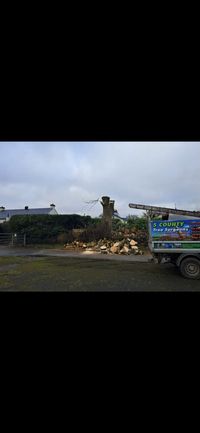
Good pruning solves a specific problem. Before any cutting, we want to know what you are trying to fix: light, clearance, a heavy limb over the roof, leaves blocking gutters, or a tree that has simply got too big. The answer decides the method.
Crown lifting removes lower branches to give clearance over a driveway, footpath, lawn or road. Crown thinning takes out selected branches through the canopy so more light and wind pass through, without changing the overall outline. Crown reduction shortens the whole canopy back to suitable growth points, making the tree smaller while keeping its natural shape. Deadwooding removes dead branches before they fall on their own.
We do not top trees. Lopping a tree flat across the top leaves large wounds that decay and produces a mass of weak, fast regrowth that ends up taller and more dangerous within a few years. A proper reduction costs about the same and leaves you with a healthier tree that needs less work in future.
Timing matters too. Most deciduous trees prune well in late autumn and winter. Birch, maple and walnut bleed sap if cut in late winter and spring, so they are better done in late summer or autumn. Cherries and plums are best pruned in summer to reduce the risk of silver leaf disease.
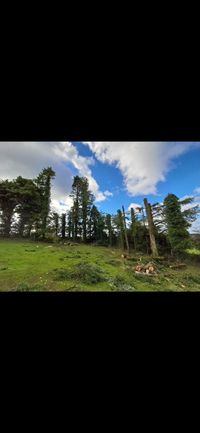
A stump left behind after felling is a trip hazard, gets in the way of mowing and stops you using that part of the garden. Old stumps can also host fungi such as honey fungus, which can spread through the soil to nearby trees and shrubs.
Stump grinding uses a machine with a toothed cutting wheel to chip the stump and main root plate away below ground level, usually somewhere between 150mm and 300mm deep. That is enough to lay new topsoil and reseed. If you are planning a patio, path, driveway or a new tree in the same spot, tell us at quote stage so we can grind deeper and wider.
Grinding does not pull out every root. The smaller roots left in the ground rot away naturally over the following years. The chippings can be raked back into the hole to settle, or removed and replaced with topsoil if you want to sow grass straight away. Let us know the width of your narrowest gate or side passage so we can plan how to get the grinder in.
Find out more about stump grinding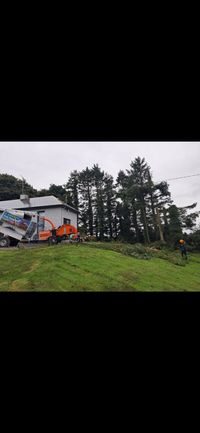
Hedges give privacy and shelter, but left alone for a few years they grow out over driveways, footpaths and neighbouring gardens. Regular trimming is cheaper and easier on the hedge than one drastic cut every five years.
The species makes a big difference. Leylandii will not regrow from old brown wood, so cutting it back too hard leaves permanent bare patches. Laurel, beech, privet and griselinia recover much better from a hard reduction. Mixed native hedgerows on farm boundaries are usually best managed with a lighter cut every year or two.
In Ireland, the Wildlife Acts restrict cutting hedgerows between 1 March and 31 August to protect nesting birds, with limited exemptions. Separately, it is an offence to destroy an active bird's nest at any time of year. In practice, we schedule heavy reductions for September to February and check every hedge for active nests before cutting, whatever the date.
Read our guide to hedge cutting dates in Ireland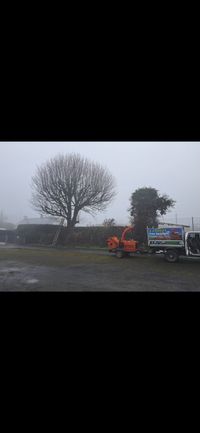
After a named storm, the same problems come up across Longford: trees across driveways and lanes, split trunks, uprooted conifers, and broken branches left hanging in the canopy. Hanging branches are the most dangerous of these because they can drop without warning, even days later.
If a tree has come down or is damaged, this is what to do:
Not every storm-damaged tree has to come down. If the damage is limited to one or two limbs, we can often remove the broken wood and keep the rest of the tree.
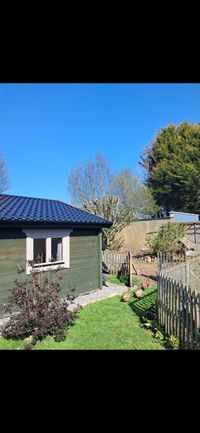
Ash is one of the most common trees on Longford farm boundaries, roadsides and older gardens, and ash dieback has spread through every county in Ireland since it was first confirmed here in 2012. Infected trees lose their crowns gradually and the timber becomes brittle. The longer a dead ash is left standing, the more dangerous it becomes to climb and dismantle, which usually means a harder and more expensive job later.
Signs of ash dieback to look out for:
Other problems we see regularly are leylandii hedges that have reached 10 metres or more, sycamore and beech overhanging roofs and blocking gutters, willow and poplar roots close to drains and foundations, and fungal brackets growing at the base of older trees. If you are unsure whether a tree is safe, send us a photo of the whole tree and a close-up of the area that concerns you.
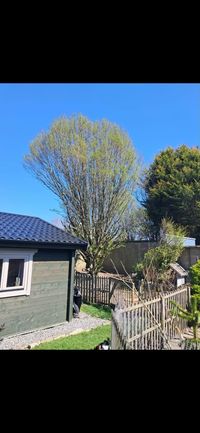
Sometimes, and it is worth checking before any felling starts. Under the Forestry Act 2014, felling a tree generally needs a felling licence from the Department of Agriculture, Food and the Marine. There are exemptions, including trees in urban areas and trees within 30 metres of a building. Most garden trees close to a house fall under an exemption, but on a farm or a larger rural site it is worth confirming first.
Some trees are protected regardless. A Tree Preservation Order, a condition attached to a planning permission (common in newer housing estates), or a site within an Architectural Conservation Area can all restrict work. Longford County Council can confirm whether any of these apply to your property.
Wildlife needs considering too. Birds nest in trees as well as hedges, and all Irish bat species are protected, so mature trees with cavities or loose bark may need a check before work goes ahead.
With neighbours, you are generally entitled to cut branches that overhang your property back to the boundary, but not to damage the rest of the tree, and the cut wood belongs to the tree's owner. A friendly conversation first saves a lot of trouble. We are happy to talk through any of this when we quote, though for a genuine dispute you should get legal advice.
Four steps from first message to a tidy garden.
Take one photo showing the whole tree or hedge and a closer one of the problem. Send them with your address and a line about what you want done.
Straightforward jobs can often be priced from photos. Bigger or riskier jobs get a site visit. The quote says what we will cut, what happens to the waste and whether the stump is included.
We set up a safe work zone, protect lawns and nearby structures, and carry out the job exactly as agreed. Anything extra is discussed with you first.
Brash is chipped, timber is stacked or removed as agreed, and the area is raked and blown down before we leave.
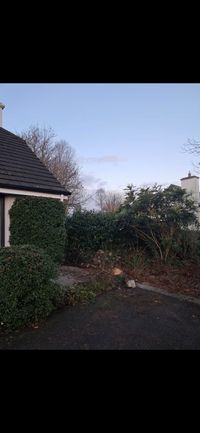
There is no fair fixed price for tree work, because two trees of the same height can be completely different jobs. A 15 metre tree in the middle of a field might take a couple of hours. The same tree leaning over a roof in a terraced back garden, with everything carried out through the house, could take a full crew all day.
The main things that affect the price are:
Grouping jobs usually works out better value. Reducing two trees, cutting a hedge and grinding an old stump on one visit costs less than three separate callouts. Send us photos and your location and we will give you a free, itemised quote.
Ask for a free quoteWe cover the whole county, from town estates to farms and rural homes.
Our tree surgeons work throughout County Longford, including Longford Town, Edgeworthstown, Ballymahon, Granard, Lanesborough, Drumlish, Newtownforbes, Ballinalee, Keenagh, Abbeyshrule, Legan and Aughnacliffe, along with the rural areas around Lough Ree and Lough Gowna.
The work varies a lot across the county. In Longford Town and the larger estates, jobs tend to be about tight access, neighbouring gardens and trees that have outgrown small plots. On farms and rural properties, it is more often ash dieback along boundaries, overgrown hedgerows, conifer shelter belts that have become too tall, and storm damage on exposed sites. Whatever the setting, tell us the address and how we get to the tree and we will plan the job around it.
Tree surgery for Mullingar, Athlone and the rest of County Westmeath.
Tree surgeon WestmeathTree removal, storm damage and hedge cutting across County Roscommon.
Tree surgeon RoscommonA selection of recent jobs, from removals and reductions to stump grinding and hedge work.
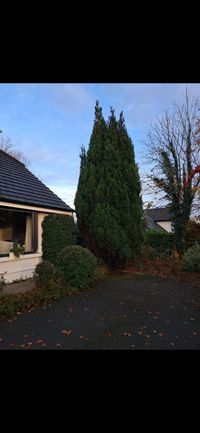
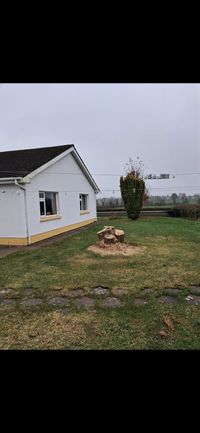
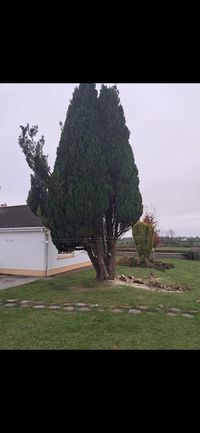
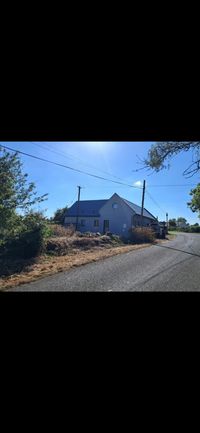
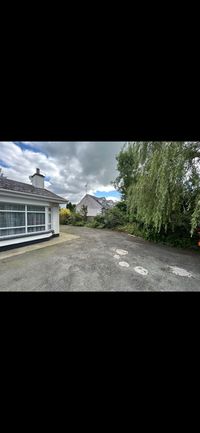
Straight answers to the questions we get asked most.
It depends on the size and condition of the tree, how easy it is to get to, what is nearby and whether you want the stump ground and the waste taken away. A small tree in an open garden can be a short job, while a large tree over a roof that has to be taken down in sections takes much longer. Send us photos and your location and we will give you a clear, free quote.
Sometimes. Felling generally needs a felling licence from the Department of Agriculture, Food and the Marine, although trees in urban areas and trees within 30 metres of a building are among the exemptions. Trees covered by a Tree Preservation Order, a planning condition or an Architectural Conservation Area also need checking with Longford County Council. Ask us and we will help you work out what applies to your site.
The Wildlife Acts restrict cutting hedgerows between 1 March and 31 August, with limited exemptions. It is also an offence to destroy an active bird's nest at any time of year, so every hedge should be checked before cutting. For heavy reductions, September to February is the time to book.
Often, yes. Crown lifting, thinning and reduction can clear a roof, let light into a garden or take weight off a heavy limb while keeping the tree. We will tell you honestly whether a tree can be kept or whether removal is the safer option.
No. Grinding takes the stump and main root plate down below ground level, usually between 150mm and 300mm, and the remaining roots rot away over time. If you plan to pave, build or replant in the same spot, tell us beforehand so we can grind deeper.
That is your choice. Branches can be chipped and taken away, and timber can be cut into rings or firewood lengths and left on site or removed. We confirm what is included when we quote so there are no surprises.
Yes. 5 County Tree Surgeons is licensed and fully insured, and we are happy to show proof of insurance before any work starts.
Yes. Ash dieback is widespread across Longford and the midlands. Badly infected ash becomes brittle, which makes it more dangerous to climb and dismantle the longer it is left. If you have ash trees near a house, road or path, get them looked at sooner rather than later.
Generally you can cut branches that overhang your property back to the boundary line, but you should not damage the rest of the tree, and the cut wood belongs to the tree's owner. It is always best to speak to your neighbour first, and to take legal advice if there is a dispute.
Keep everyone well back. If the tree is touching power lines, do not go near it and call ESB Networks on 1800 372 999. If it is blocking a public road, contact Longford County Council or the Gardaí. Take photos from a safe distance for your insurer, then call us on 085 816 8484.
It depends on the time of year and how urgent the job is. Dangerous trees and storm damage are prioritised. For everything else, send us photos and we will give you a date when we quote.
We cover all of County Longford, including Longford Town, Edgeworthstown, Ballymahon, Granard and Lanesborough, along with Cavan, Westmeath, Roscommon and Sligo.
The dates that apply in Ireland, why they exist and how to plan hedge work around them.
Read the hedge cutting guideWhat tree surgeons do, the training and equipment involved, and when you need one rather than a general gardener.
Read what a tree surgeon doesSend us a photo of the tree or hedge, your address and what you want done, and we will come back to you with a free quote.